
Fintech Cybersecurity Risks: Main Risks And How To Address Them
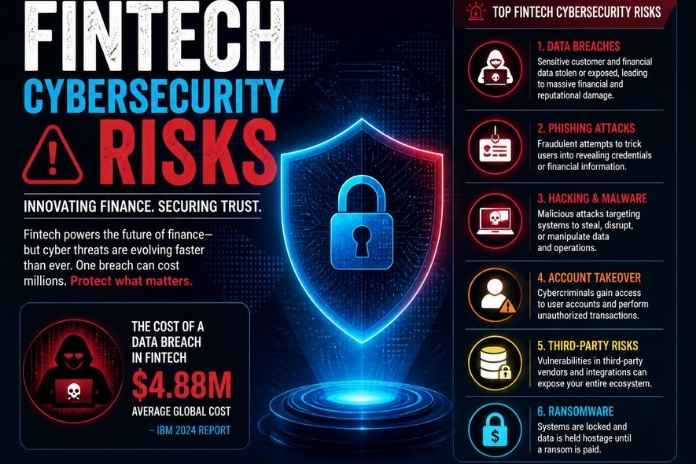
The growth of the fintech ecosystem has profoundly transformed the way financial services are provided, driving innovation, digitisation, and operational efficiency.
New business models, 100% digital platforms, and a strong user focus have allowed fintech companies to gain market share and respond quickly to needs that the traditional financial sector did not always meet as rapidly.
However, this same highly digitised, interconnected and regulated environment exposes fintech to particularly critical cybersecurity risks, with a direct impact on business continuity, customer trust and regulatory compliance.
Unlike other organisations, a fintech company bases its value proposition almost exclusively on technology, making any security incident a direct threat to its viability.
In this context, understanding the main risks of fintech and how to address them through a solid fintech security strategy is key to ensuring its sustainability, growth, and credibility with customers, investors, and regulators.
Why Do Fintech Companies Face Particularly Critical Cybersecurity Risks?
A Digital, Connected Environment With High Technological Dependence
Fintech companies operate almost exclusively in digital environments.
Their business models rely heavily on technologies that, while enabling innovation, also expand the attack surface:
- Cloud platforms and distributed architectures that concentrate large volumes of critical information.
- Open APIs for integration with third parties, open banking, and collaborative ecosystems.
- High-exposure digital channels such as mobile applications, online banking, or payment platforms.
- Intensive automation of critical processes, from identity validation to the execution of financial transactions.
This technological dependence means that any security failure, whether due to a technical vulnerability, a configuration error, or misuse, quickly translates into a real operational risk.
What Causes Fintech Risks to Directly Impact the Business?
In a fintech company, a cybersecurity incident is not just a technical problem that can be resolved in isolation.
Its impact is usually cross-cutting and can affect multiple dimensions of the business:
- Disruption of essential financial services, with immediate impact on customers and partners.
- Loss of trust from users, investors and markets, difficult to recover.
- Regulatory sanctions and reputational damage, especially in highly supervised sectors.
- Direct economic impact, both from the incident itself and from the subsequent response.
Therefore, cybersecurity risks in fintech are closely linked to business continuity and must be managed as strategic risks, not just technical ones.
What Is Fintech Security and Why Is It Key to Reducing Risk Exposure?
The concept of fintech security refers to the application of cybersecurity strategies specifically adapted to the digital financial sector, taking into account its regulatory framework, its operational criticality and its high level of exposure to threats.
It’s not just about protecting systems but about integrating security as part of the business model, aligning it with risk management, operational resilience, and regulatory compliance.
The Relationship Between Cybersecurity, Business Continuity, and Digital Trust
In the fintech sector, cybersecurity acts as a true business enabler:
- It guarantees the availability of digital financial services.
- It protects the integrity of transactions and sensitive information.
- It strengthens the confidence of customers, partners, and regulators.
- It facilitates compliance with increasingly demanding regulatory requirements.
Without a solid security strategy, it is impossible to sustain growth in a competitive and regulated environment.
Why Should Safety Be Integrated From the Design Stage?
Addressing cybersecurity solely as an after-the-fact layer increases risk and costs.
In contrast, integrating security by design allows:
- Reduce structural vulnerabilities in systems and processes.
- Facilitate regulatory compliance from early stages.
- Minimise long-term correction, response, and penalty costs.
This approach is especially relevant in fintech, where speed of development and deployment is key.
Main Cybersecurity Risks of Fintech
Fraud, Credential Theft, and Identity Theft
Digital channels are the primary attack vector for fintech fraud. Among the most common threats are:
- Phishing and smishing attacks targeting customers and employees.
- Compromise of credentials through social engineering techniques.
- Fraud in payments and electronic transactions.
- Identity theft in registration and authentication processes.
These risks directly affect user confidence and can generate significant economic losses, in addition to regulatory sanctions.
Data Breaches and Privacy Risks
Fintech companies manage large volumes of sensitive data, both financial and personal. A security breach can lead to:
- Disclosure of confidential information.
- Non-compliance with GDPR and other privacy regulations.
- High economic sanctions.
- Reputational damage that is difficult to reverse.
Data protection is not only a legal obligation but also a critical factor of trust.
Technological Vulnerabilities, Third Parties, and Critical Suppliers
The intensive use of third parties (cloud providers, SaaS services, integrators) introduces additional risks:
- Dependence on critical suppliers for operations.
- Lack of visibility into external security controls.
- Risks in the digital supply chain.
Third-party risk management has become one of the major challenges in the fintech sector.
How to Address Fintech Risks From a Cybersecurity Strategy?
Visibility, Monitoring, and Early Detection of Threats
An effective strategy should provide:
- Continuous visibility of the security status of systems and processes.
- Monitoring of anomalous events and behaviours.
- Early detection capabilities to reduce the impact of incidents.
The sooner a threat is detected, the smaller its operational and economic impact.
Vulnerability Management, Incident Response, and Operational Resilience
It is key to have:
- Mature vulnerability management processes.
- Proven and updated incident response plans.
- Resilience and recovery strategies in the face of serious failures.
All of this must be aligned with regulatory frameworks such as DORA, which strengthen the digital resilience of the financial sector.
Awareness, Security Governance, and Continuous Review
Technology is not enough without good security governance:
- Awareness and ongoing staff training.
- Clear definition of roles and responsibilities.
- Periodic review of controls and risks.
Security is an ongoing process, not a one-off project.
The Role of Regulation and Compliance in Fintech
How Are Cybersecurity and Regulatory Compliance Connected?
In the fintech environment, cybersecurity is a pillar of compliance. Regulations such as GDPR and DORA establish direct requirements regarding:
- Protection of personal and financial data.
- ICT risk management.
- Business continuity.
- Management of critical third parties and suppliers.
Regulatory compliance and security must be addressed in an integrated manner.
DORA and GDPR as Reference Frameworks
The DORA Regulation aims to strengthen the digital resilience of the financial sector, while GDPR protects privacy and user rights. Both frameworks are complementary and require fintech companies to adopt a comprehensive approach to risk management.
How Can These Risks Be Addressed From a Regulatory Perspective?
Fintech companies must:
- Align your security strategy with regulatory frameworks.
- Conduct periodic audits.
- Integrate governance, risk and compliance (GRC) into your operating model.
Only through a comprehensive approach is it possible to reduce risk exposure and ensure sustainable growth.
Also Read: Cybersecurity Tips You Should Follow To Protect Your Business