
What Is The Difference Between Digital Signature And Electronic Signature?
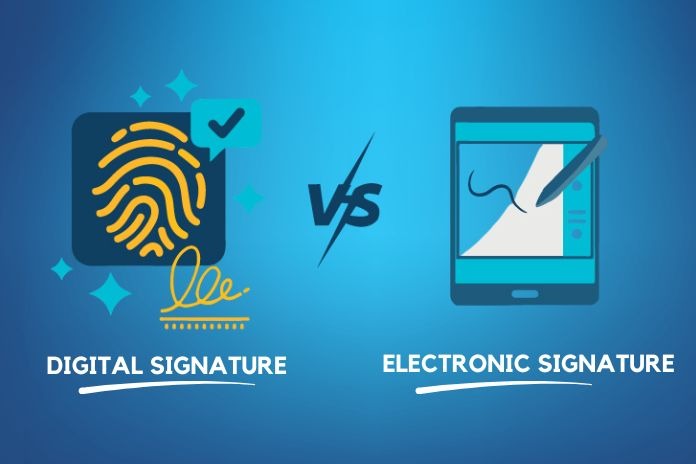
Many companies and individuals have adopted the convenience of signing documents electronically instead of printing, signing, scanning, and submitting them. As a result, electronic signatures and digital signatures have become an essential part of everyday business and online transactions.
People often use the terms “digital signature” and “electronic signature” synonymously; however, there are many differences between these two signatures. Both types of signatures can be used to verify approvals electronically; however, these two signatures are slightly different. Understanding the difference between these two will help you choose the right option when signing contracts, agreements, forms, or other documents digitally.
What Is an Electronic Signature?
An electronic signature, sometimes called an e-signature, is a broad term that refers to any electronic means of signing a document indicating agreement to its contents.
For example, an electronic signature could be as basic as typing your name into an electronic form or signing the document with an electronic stylus pen or by clicking a mouse. It might also be something more sophisticated such as clicking a button labeled “I agree” depending upon the context and applicable laws.
Electronic signatures typically appear in everyday documents such as employment agreements, sales contracts, registration forms, and other similar agreements. They are typically created in a manner that makes them simple to use and often provide a means of accelerating the signing of a contract since they avoid the need to print, sign, and distribute physical copies of the document.
But the specific legal criteria for electronic signatures are broader and more diverse, depending on the country, document type, and involved circumstances.
What Is A Digital Signature?
A digital signature is one type of electronic signature, bearing in mind that it uses more substantial cryptographic techniques to guarantee the validity of the signee’s authenticity, as well as the document’s integrity (after sign-off).
The digital signature typically relies on a cryptographic key pair and is created using a qualified digital certificate issued by a certified ‘trusted source.’
When the digital signature is applied, there is an option to add an additional level of confidence and safety when delivering the documents digitally to the signee(s).
As a guideline, whenever any amendment is made to the document after sign-off, such changes may call into question the document’s authenticity and reliability. In addition, the digital signature’s main goal is to bring more trust and safety to the digital signing process and give the signee(s) an extra level of protection when signing off on any electronic documents.
Furthermore, digital signatures are also used when there is a need to add more substantial authenticity, integrity, and security to the person signing them.
Digital Signature vs Electronic Signature
| Feature | Electronic Signature | Digital Signature |
| Meaning | Broad method of signing electronically | Specific type of electronic signature |
| Technology | Can use simple electronic methods | Uses cryptographic technology |
| Identity verification | May vary depending on the method | Typically uses digital certificates |
| Document protection | Depends on the service used | Helps detect unauthorized changes |
| Common use | Forms, contracts, approvals | Sensitive or high-security documents |
| Ease of use | Generally simple | May require additional setup |
Key Benefits Of Electronic Signatures
There are many benefits to using electronic signatures as a business solution for an individual or a company.
- Faster signing: By using the electronic signatures, documents can be signed online, so there is no need to physically print and mail them.
- Convenience: Users are able to sign documents from different locations by using the computer or a smartphone.
- Less paperwork: Signing digitally eliminates the need for paper documents and makes the process very simple.
- Efficient business processes: Businesses are able to speed up the flow of business by electronically sending, signing, and storing documents.
Key Benefits Of Digital Signatures
Digital signatures can also offer further security features that may be useful for sensitive documents.
- Improved authentication: Digital signatures may be used in identification of the author of a document.
- Document integrity: Documents that have been signed can be verified using cryptographic techniques.
- Enhanced security: Digital signatures provide far greater technical security compared to the most common types of electronic signing.
- Even more trust: Financial institutions or any business dealing with sensitive transactions could use digital signatures for increased reassurance that the document is real and unchanged.
Which One Should You Use?
The decision between both is entirely dependent upon the context. If, for example, you need to make routine signings for business, such as forms, approvals, and agreements, then an electronic signature would do.
But if you want more secure authentication and non-tampering, choose the digital signature as an alternative. Moreover, organizations are advised to consider the legal and regulatory issues, especially if they are operating in a specific country or if the documents pertain to a particular domain.
It should be noted that there are certain documents that cannot be electronically signed as per the respective jurisdiction wherever applicable. Thus, it is advisable to research the legalities before deciding on the type of signature to use.
Final Thoughts
Both digital signatures and electronic signatures simplify the process of signing the documents electronically instead of in a paper-based world. But it is not the same for a digital signature and an electronic signature. An electronic signature is the virtual signature on the message document, which indicates the agreement representation of any message; the digital signature is the encryption of the message document.
Electronic signatures may be best suited for simple documents and regular approvals, providing faster and easier signing. Digital signatures may be preferred as more applicable where there is an increased risk of the transaction. Be aware of the differences between these signing processes so you can choose the one that best meets your needs or those of your company.
Also Read: How To Split Screen On Android